Imagine a world where your phone instantly understands the scene you point it at, factories self‑inspect every product in real time, and autonomous drones navigate cluttered skies without a hitch. That world isn’t tomorrow—it’s unfolding right now, driven by a wave of computer‑vision breakthroughs that are redefining what AI can see.
Top 10 Computer Vision Trends Shaping AI in 2024
1. Foundation Models Go Visual
Large‑scale vision foundation models such as Meta’s SEEM and Google's Flamingo‑Vision are being pre‑trained on billions of images, then fine‑tuned for niche tasks with just a handful of examples. The result? Faster deployment and dramatically lower labeling costs.
2. Multimodal Fusion Becomes Standard
Combining text, audio, and video streams lets systems reason across modalities. Applications range from video‑based shopping assistants that answer product questions to AR glasses that overlay contextual info from spoken cues.
3. Edge‑Optimized Transformers
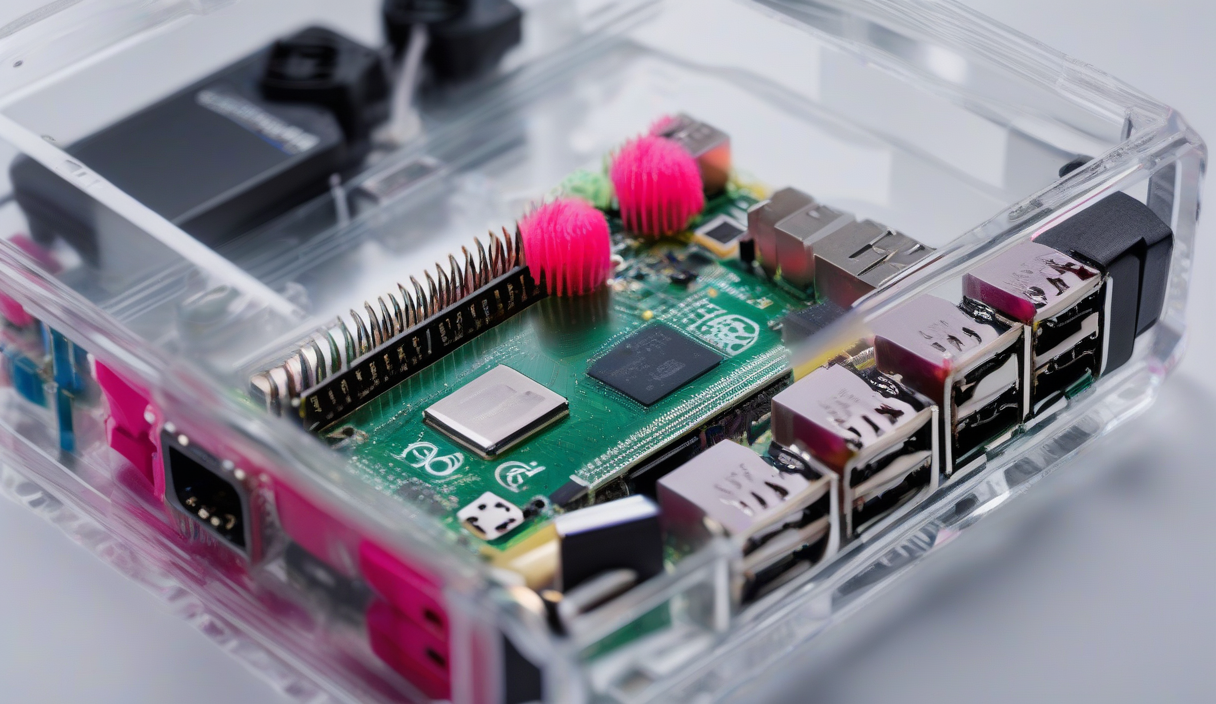
New lightweight transformer variants (e.g., MobileViT‑V2) deliver near‑server accuracy on microcontrollers, enabling real‑time inference on drones, wearables, and IoT cameras without cloud latency.
4. Self‑Supervised Segmentation
Algorithms that generate their own pixel‑level masks from unlabeled video are cutting annotation budgets by up to 80%. Companies are using this to keep production lines in check without manual inspections.
5. Synthetic Data at Scale
Game engines and neural radiance fields now produce photorealistic training sets on demand, closing the domain‑gap for rare scenarios like night‑time traffic or underwater robotics.
6. Privacy‑Preserving Vision
Federated learning and homomorphic encryption let cameras improve models without ever sending raw frames to a server, a must‑have for GDPR‑heavy markets.
7. Real‑World Robustness Benchmarks
New evaluation suites (e.g., RobustVision) stress test models against motion blur, occlusion, and adversarial lighting, pushing vendors to ship truly resilient solutions.
8. 3D Understanding Becomes Mainstream
Depth‑aware networks now fuse LiDAR, stereo, and monocular cues, powering accurate scene reconstruction for AR, robotics, and autonomous shipping.
9. Explainable Vision AI
Heat‑map overlays and concept activation vectors are being integrated into UI dashboards, giving engineers and end‑users insight into why a model flagged a defect.
10. Democratized Toolchains
Open‑source platforms like CVHub and cloud APIs now bundle pre‑trained vision models, data pipelines, and UI components, letting startups launch vision products in weeks instead of months.
💡
TipStart experimenting with a foundation model today—most providers offer a free tier that lets you fine‑tune on 10–20 images and see immediate ROI.
✦
Actionable next steps: 1) Identify a low‑ hanging use case where visual data is already collected. 2) Choose a pre‑trained foundation model that matches your domain (e.g., medical imaging vs. retail). 3) Use a synthetic data generator to augment edge cases. 4) Deploy on an edge‑optimized transformer and monitor accuracy with a robustness benchmark. 5) Iterate with federated updates to keep privacy intact.
"The future of AI isn’t just about bigger models—it’s about smarter, faster, and more responsible vision systems.
— Dr. Lina Patel, Vision Research Lead