Your phone unlocks with a glance. A factory robot rejects a cracked gear in milliseconds. A radiologist gets a second opinion from an algorithm that never sleeps. Computer vision isn't futuristic — it's the invisible layer powering decisions across healthcare, logistics, security, and the device in your pocket. In 2026, the market surpasses $24 billion, and the stack running it is more accessible than ever.
What Computer Vision Actually Does
Computer vision teaches machines to extract meaning from pixels. The core tasks haven't changed: classification, detection, segmentation, tracking. What shifted is the reliability ceiling. Production systems now hit 99%+ accuracy on constrained domains — defect spotting on assembly lines, license-plate reading at highway speeds, tumor segmentation in MRI slices. The gap between demo and deployment has narrowed because the tooling matured.
The 2026 Stack: OpenCV, PyTorch, and the Model Zoo
Python remains the lingua franca. OpenCV handles the plumbing — decoding streams, warping perspectives, calibrating cameras, running traditional filters. Deep learning frameworks (PyTorch leads, TensorFlow holds ground) own the heavy lifting: backbone training, quantization, ONNX export. The model zoo exploded. YOLOv10 and RT-DETR dominate real-time detection. ViT-Hybrid backbones win on classification. SAM 2 and Grounding DINO enable zero-shot segmentation and open-vocabulary detection without retraining.
💡
TipExport to ONNX, then TensorRT or OpenVINO for 3-5x inference speedup on edge hardware. Quantize to INT8 with calibration data — accuracy drop is typically <1%.
Architecture Choices: Speed vs. Accuracy
| Task | Speed-Critical Model | Accuracy-Critical Model | Typical Latency (T4) |
|---|---|---|---|
| Object Detection | YOLOv10-N / RT-DETR-R18 | YOLOv10-X / RT-DETR-R101 | 2-15 ms |
| Instance Segmentation | YOLOv10-N-Seg | SAM 2 (Large) | 5-40 ms |
| Classification | MobileNetV4 / EfficientNet-B0 | ViT-H / ConvNeXtV2-H | 1-8 ms |
| Pose Estimation | YOLOv10-N-Pose | ViTPose-H | 3-20 ms |
Rule of thumb: start with the smallest model that meets your accuracy floor. Profile on target hardware. Only scale up when the confusion matrix demands it. Most production systems over-model by 2-3x.
Data Pipelines That Don't Rot
The model is 20% of the work. Data curation, augmentation, versioning, and monitoring eat the rest. In 2026, teams use Albumentations for CPU-bound transforms, Kornia for GPU-accelerated ones, and FiftyOne or Label Studio for dataset exploration. Version datasets with DVC or LakeFS. Track drift with Evidently or custom embedding-distance monitors. Automate relabeling loops: low-confidence predictions → human review → dataset update → retrain → deploy.
"The best model architecture can't fix a dataset that doesn't reflect production lighting, occlusion, or sensor noise.
— Andrej Karpathy
Deployment Patterns: Cloud, Edge, Hybrid
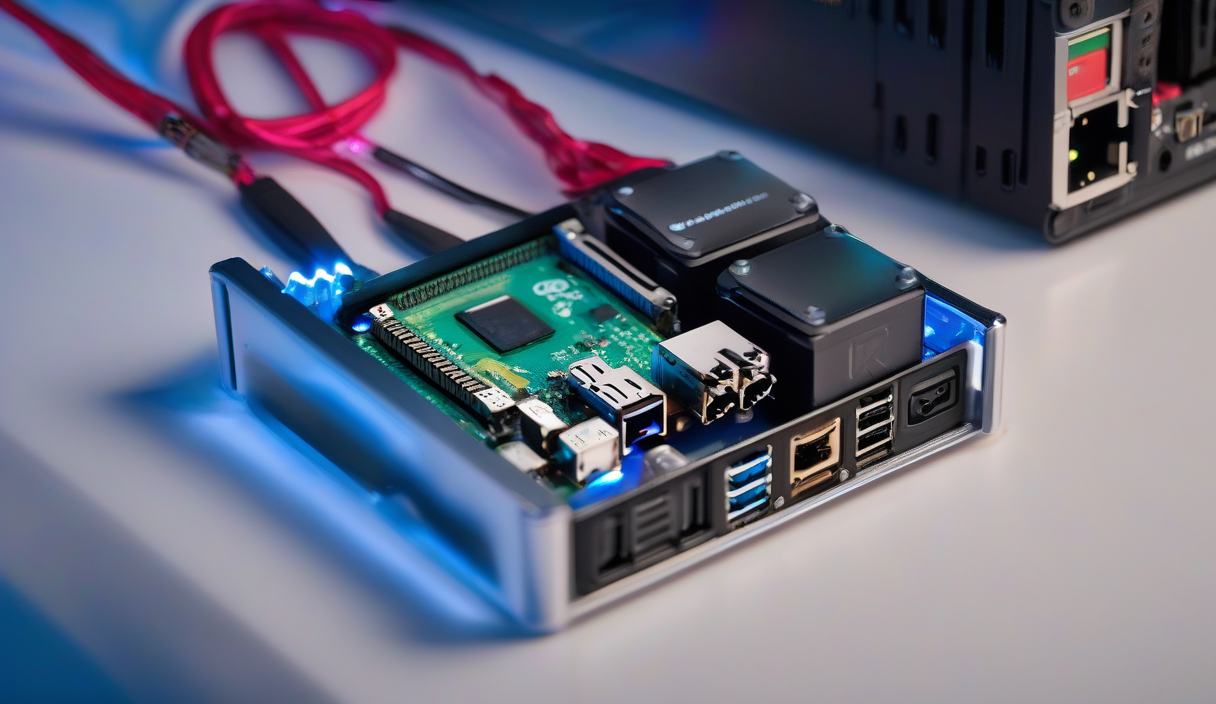
Cloud (GPU instances, Triton Inference Server) handles batch analytics, training, and high-throughput streams. Edge (Jetson Orin, Hailo, Google Coral, Raspberry Pi 5 + AI Kit) owns latency-sensitive loops — robotics, safety shutoffs, privacy-first cameras. Hybrid splits: edge runs detection, crops regions, uploads thumbnails for cloud classification. Use gRPC or MQTT for device-to-cloud. Containerize with Docker, orchestrate with K3s on edge fleets.
⚠️
WarningDon't ignore thermal throttling. A Jetson Orin NX sustains 70 TOPS for ~3 minutes before dropping 40%. Design duty cycles and heatsinks for sustained loads.
Evaluation Beyond mAP
[email protected] is a starting point, not a contract. Measure per-class recall at your operating confidence threshold. Track false-positive rate per 1,000 frames — critical for alarm fatigue. Latency distribution (p50, p95, p99) matters more than average. Test on corner cases: rain, glare, motion blur, adversarial patches. Build a regression suite of 500+ curated edge cases. Gate deployments on zero regression, not just higher mAP.
✦
Your Next Steps
Pick one real problem: defect counting, safety-zone monitoring, document classification. Collect 2,000 labeled images — diverse lighting, angles, backgrounds. Train YOLOv10-N on Roboflow or local GPU. Export ONNX, benchmark on your target device. If latency and accuracy clear your thresholds, containerize, add logging, deploy behind a feature flag. Iterate weekly. The stack is ready. The bottleneck is now your labeled data and your evaluation rigor.