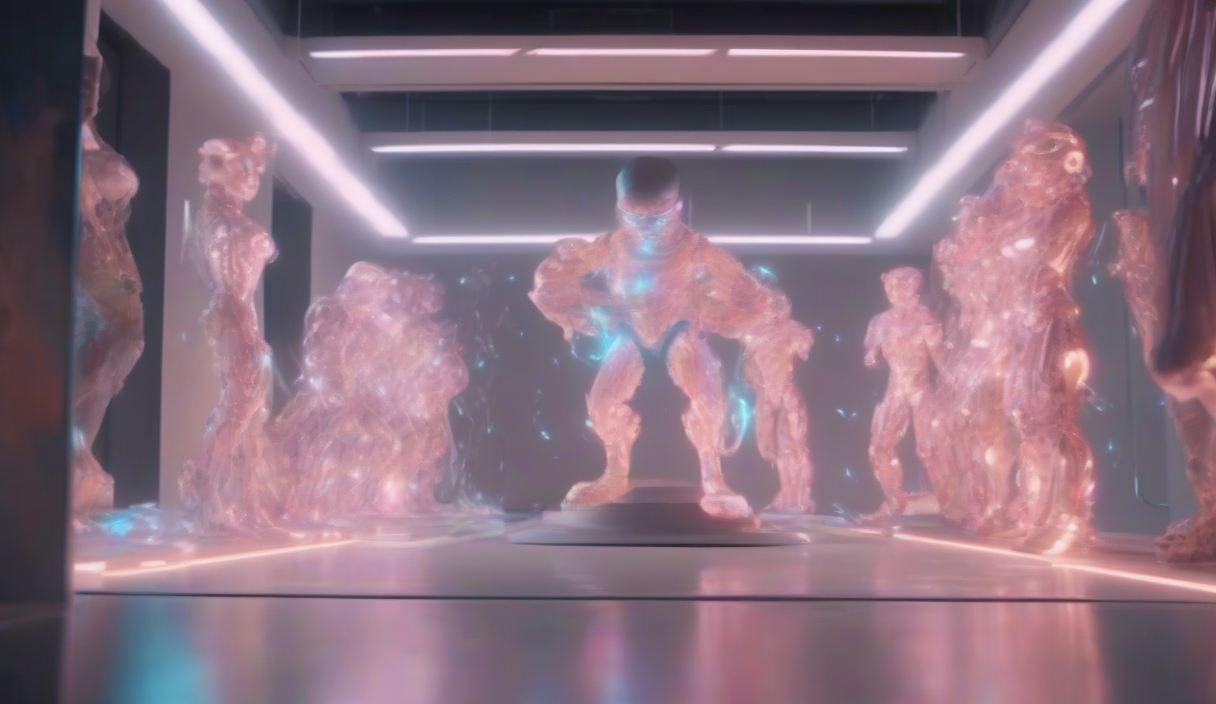
The era of physics-limited photography is over. For decades, image quality was a direct function of glass diameter and sensor surface area — bigger lenses, bigger sensors, better photos. In 2026, silicon has bypassed those hard limits. Your smartphone now houses a professional-grade studio powered by AI-ISPs, semantic segmentation, and generative reconstruction. The camera didn't just get smarter; it stopped being a camera in the traditional sense and became a computational engine.
The AI-ISP: Replacing Optics with Math
Traditional Image Signal Processors (ISPs) followed a fixed pipeline: demosaicing, denoising, sharpening, tone mapping. They treated every pixel equally. The 2026 AI-ISP throws that pipeline away. Using on-device neural networks trained on billions of images, the ISP now understands content. It distinguishes skin from sky, fabric from foliage, and applies per-region processing that mimics the decisions of a human retoucher. Noise vanishes from shadows without smearing texture in highlights. Chromatic aberration is corrected not by lens coatings but by pixel-level inference. The result? A 1/1.3-inch sensor outputting detail that rivals 1-inch sensors from 2023.
Semantic Segmentation: The Scene Understands Itself
Segmentation maps have moved from cloud APIs to the silicon level. The ISP generates real-time masks for over 200 semantic classes — faces, eyes, teeth, hair, sky, water, text, screens, license plates. Each mask carries its own processing recipe. Skies get HDR expansion and gradient smoothing. Faces get subsurface scattering simulation for natural skin tones. Text gets super-resolution sharpening. This happens at 4K60 video rates with zero shutter lag. Photographers no longer "expose for the highlights"; the chip exposes for every semantic layer simultaneously.
"We stopped building cameras that capture light. We started building computers that understand scenes.
— Marc Levoy, Computational Photography Pioneer
Generative Reconstruction: Hallucinating Detail Responsibly
This is the controversial frontier. When optical resolution hits the diffraction limit, 2026 phones don't just upscale — they reconstruct. Generative diffusion models, distilled to run on NPUs, synthesize plausible high-frequency detail: individual eyelashes, fabric weave, brick texture. The key constraint is adherence. The model is conditioned on the raw sensor data, multi-frame alignment, and semantic priors so it invents only what could exist, not what looks cool. Watermarking metadata (C2PA) flags reconstructed regions for forensic transparency. For event photographers, this means usable 100MP crops from a 12MP sensor. For journalists, it means a new verification workflow.
⚠️
WarningGenerative reconstruction blurs the line between photography and illustration. Always embed C2PA provenance metadata. Never use 'enhanced' frames as forensic evidence without disclosure.
The New Creative Stack
Raw DNG files now ship with auxiliary maps: depth, segmentation, motion vectors, confidence scores. Editing apps ingest these as native layers. Masking a subject takes one tap because the phone already computed the mask at capture. Relighting uses the depth map. Sky replacement uses the semantic map. Focus stacking uses the multi-frame buffer. The "edit" begins in the ISP, not Lightroom. This shifts the photographer's role from pixel-pusher to director of intent — you declare the look; the pipeline executes it across every frame instantly.
| Capability | 2023 Approach | 2026 AI-ISP Approach |
|---|---|---|
| Denoising | Bilateral filter / basic ML | Per-semantic-class diffusion denoiser |
| HDR | 3-frame bracket + ghost removal | 15-frame neural fusion + motion synthesis |
| Portrait Mode | Depth map + Gaussian blur | Subsurface scattering + lens simulation |
| Zoom | Hybrid optical + bicubic | Generative super-res + optical flow |
| White Balance | Gray world / learning AWB | Semantic-aware illuminant estimation |
Staying Relevant: What Photographers Must Do Now
1. Shoot Raw + Auxiliary Data. Enable "Computational Raw" or vendor equivalent. You need the depth, segmentation, and confidence maps for post control.
2. Learn the Semantic Vocabulary. Understand which classes your device segments. Prompt the ISP by tapping the screen — it biases the segmentation.
3. Master Intent-Based Editing. Stop sliding sliders. Use tools that accept natural language (“make the background moody but keep skin natural”) and translate to semantic-layer operations.
4. Verify Provenance. Adopt C2PA-aware workflows. Clients will demand proof of capture vs. generation.
5. Invest in Light, Not Glass. A $200 LED panel and a diffuser beat a $2,000 lens when the ISP can simulate any focal length, aperture, or lighting direction from a single multi-frame burst.
💡
TipEnable 'Computational Raw' in your camera settings. It saves the sensor readout plus all neural intermediate maps — depth, segmentation, motion — giving you maximum latitude in post.
✦
The camera is dead. Long live the visual computer. 2026 doesn't ask you to choose between convenience and quality — it fuses them. Your job isn't fighting physics anymore. It's directing the silicon. Pick up the phone. Frame the shot. Declare the intent. The studio in your pocket handles the rest.