Your phone encrypts messages with math that would take the world's fastest supercomputer millions of years to crack. A sufficiently powerful quantum computer could break it in hours. That's not science fiction—it's the promise and the threat driving billions in global investment right now.
What Is a Qubit, Really?
Classical bits are switches: 0 or 1. Qubits are different. They exploit quantum mechanics to exist in a combination of 0 and 1 simultaneously—a state called superposition. Mathematically, a qubit is a vector in a two-dimensional complex Hilbert space: |ψ〉 = α|0〉 + β|1〉, where |α|² + |β|² = 1.
This doesn't mean the qubit is "both at once" in a vague sense. It means the probability amplitudes α and β interfere constructively or destructively during computation. When you measure, the superposition collapses to a definite 0 or 1 with probabilities |α|² and |β|². The art of quantum programming is choreographing interference so wrong answers cancel out and right answers amplify.
Entanglement: The Multiplier
One qubit gives you two amplitudes. Two entangled qubits give you four. Fifty entangled qubits give you 2⁵⁰ amplitudes—more than a petabyte of classical RAM could represent. Entanglement correlates qubits so that measuring one instantly determines the state of its partners, no matter the distance. This isn't faster-than-light communication; it's a correlation stronger than any classical physics allows.
"Entanglement is not one of those 'spooky' things. It's the fuel that makes quantum algorithms exponentially more expressive than classical ones.
— Scott Aaronson
Quantum Gates and Circuits
Quantum gates are unitary matrices that rotate the state vector. The Hadamard gate (H) creates superposition. The CNOT gate entangles pairs. The T gate adds the phase shifts needed for universal computation. Any quantum algorithm is a sequence of these gates—a circuit—applied to an initial state, followed by measurement.
The Algorithm Landscape
| Algorithm | Speedup | Target Problem | Status |
|---|---|---|---|
| Shor's | Exponential | Integer factorization / discrete log | Theoretical; breaks RSA/ECC |
| Grover's | Quadratic | Unstructured search | Theoretical; speeds up brute force |
| VQE | Heuristic | Molecular ground states | Running on NISQ hardware |
| QAOA | Heuristic | Combinatorial optimization | Running on NISQ hardware |
Shor's algorithm is the famous one: it factors large integers in polynomial time, threatening RSA and elliptic-curve cryptography. Grover's gives a quadratic speedup for searching unsorted databases—useful, but not exponential. The algorithms actually running on today's noisy machines (VQE, QAOA) are hybrid: a quantum subroutine embedded in a classical optimization loop. They don't yet beat classical methods on practical problems, but they're how we learn.
Hardware Reality Check (2026)
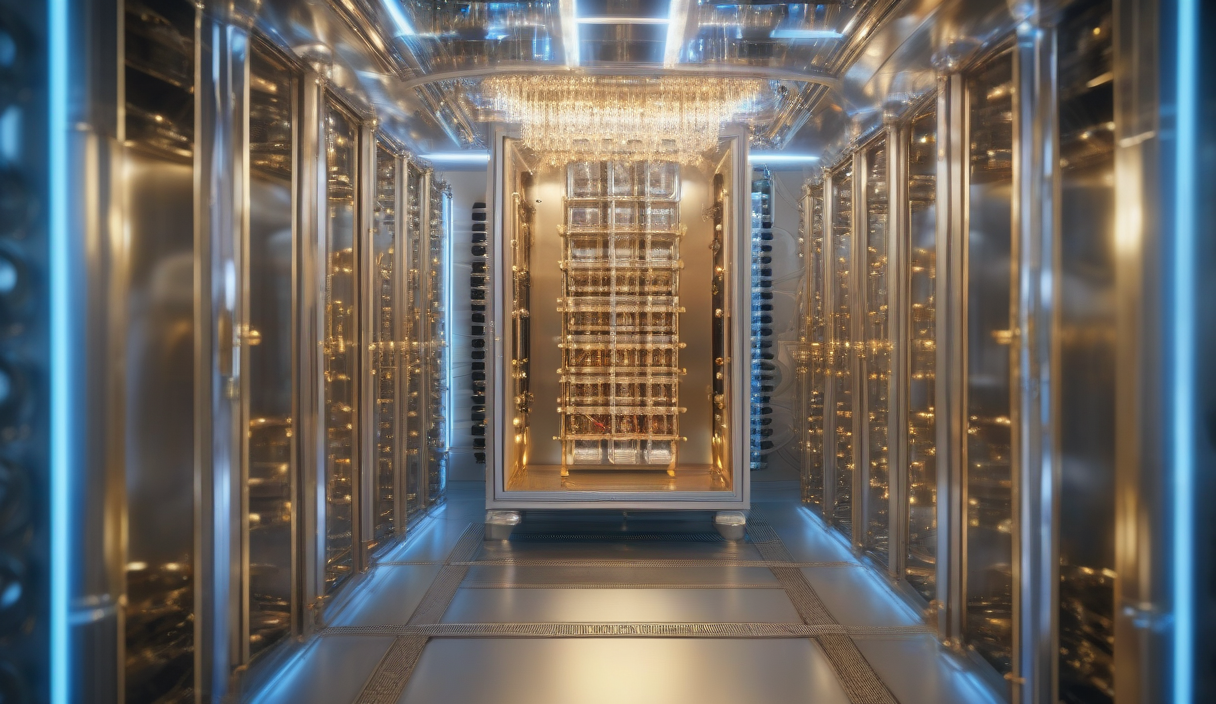
Three platforms lead: superconducting circuits (IBM, Google, Rigetti), trapped ions (IonQ, Quantinuum), and neutral atoms (Atom Computing, QuEra). Superconducting leads in qubit count (1,000+ on roadmap) and gate speed. Trapped ions lead in fidelity and all-to-all connectivity. Neutral atoms lead in scaling geometry. All require dilution refrigerators or ultra-high vacuum. None are fault-tolerant yet.
⚠️
WarningLogical qubits require 10–1,000 physical qubits for error correction. A 1,000-qubit chip today yields maybe 1–10 logical qubits. We're in the NISQ era: Noisy Intermediate-Scale Quantum.
What You Can Actually Do Today
Access real hardware via cloud: IBM Quantum, Amazon Braket, Azure Quantum, Google Quantum AI. Run tutorials, test error mitigation, benchmark your own variational circuits. Don't expect advantage. Do expect to learn the programming model—that's the scarce skill.
💡
TipStart with Qiskit or Cirq. Build a VQE for H2 molecule. Compare simulator vs. hardware results. That gap is your education.
Where This Goes Next
Roadmaps converge on 2029–2033 for first fault-tolerant logical qubits. Post-quantum cryptography standardization (NIST PQC) is already deploying lattice-based algorithms. The wise move: inventory your crypto, migrate to PQC, and keep a quantum R&D budget—not for advantage today, but for readiness tomorrow.
✦
Quantum computing isn't magic. It's linear algebra with physics constraints. The hardware is noisy, the algorithms are niche, and the timeline is uncertain. But the theory is solid, the investment is real, and the cryptographic deadline is fixed. Learn the gates. Run the circuits. Plan the migration.