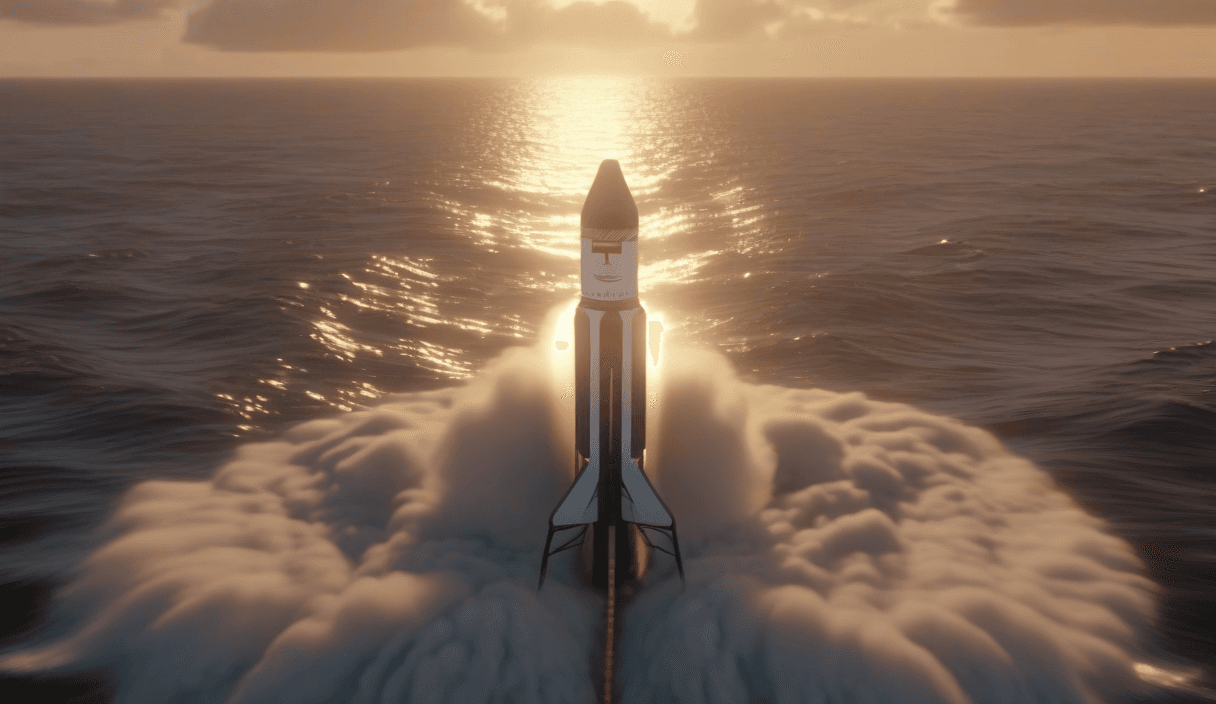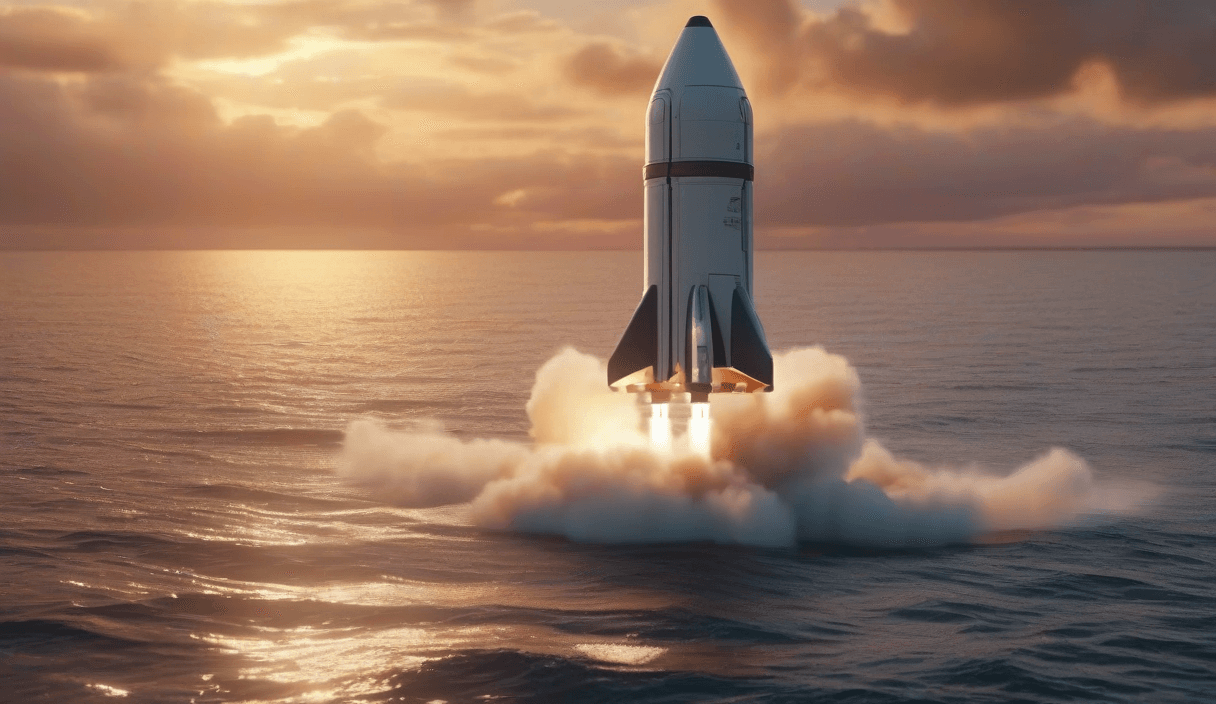
The first time a Falcon 9 booster touched down vertically on a drone ship in April 2016, the control room erupted. Not because the rocket flew — that was routine — but because it came home. That moment rewrote the economics of spaceflight. Today, reusable rocket landing technology has slashed orbital launch costs by 58%, turning what was once a disposable $60M hardware loss per flight into a recoverable asset. The revolution isn’t just about saving money; it’s about cadence. When you don’t have to build a new first stage for every mission, you launch more often, iterate faster, and open space to entirely new mission classes.
The Engineering Behind the Return
Landing a 14-story booster traveling at Mach 10 requires a choreography of precision burns. After stage separation, the booster flips 180 degrees using cold gas thrusters, then executes three critical burns: a boostback burn to reverse downrange velocity, an entry burn to survive atmospheric reentry heating, and a final landing burn to decelerate to near-zero velocity meters above the deck. Grid fins deployed during descent provide aerodynamic control, steering the stage like a dart. All of this happens autonomously — no ground pilot, no joystick. The onboard computer processes sensor data at 100Hz, adjusting engine gimbal and fin angles in real time to hit a 10-meter target circle on a moving ship in open ocean.
"Reusability is the critical breakthrough needed to make life multiplanetary. If one can figure out how to effectively reuse rockets just like airplanes, the cost of access to space will be reduced by as much as a factor of a hundred.
— Elon Musk, SpaceX Founder
Beyond SpaceX: The Competitive Landscape
SpaceX proved the model, but they’re no longer alone. Blue Origin’s New Shepard pioneered vertical takeoff and landing (VTOL) for suborbital tourism, while their orbital-class New Glenn aims for first-stage recovery on a moving ship. Rocket Lab’s Electron uses a helicopter mid-air capture for its smaller booster — a radically different approach suited to lightweight vehicles. Relativity Space’s Terran R and ULA’s Vulcan with SMART reuse (engine recovery via inflatable heat shield) show the industry converging on reusability as table stakes. Even China’s commercial sector, led by LandSpace and iSpace, has demonstrated hop tests and orbital-class recovery prototypes. The paradigm has shifted: expendable rockets are becoming legacy technology.
| Vehicle | Recovery Method | Status |
|---|---|---|
| Falcon 9 / Heavy | Drone ship / RTLS landing | Operational (300+ landings) |
| Starship | Mechazilla tower catch | In testing (IFT-5 caught booster) |
| New Glenn | Downrange ship landing | Pre-flight (debut 2025) |
| Electron | Helicopter mid-air capture | Demonstrated (2022) |
| Vulcan (SMART) | Inflatable heat shield + parafoil | In development |
| Terran R | RTLS landing | In development |
ℹ️
NoteStarship’s “Mechazilla” tower catch eliminates landing legs entirely, saving mass and enabling rapid reuse. The Super Heavy booster returns to the launch mount, caught by chopstick arms — a 230-ton rocket caught like a pencil.
Economics: The 58% Cost Reduction Explained
The 58% figure comes from comparing Falcon 9’s current $67M list price for a reused booster versus the ~$160M cost of a fully expendable equivalent (adjusted for inflation from early Falcon 9 v1.0 pricing). But the real savings compound with flight rate. A single booster flying 15 times amortizes its build cost across 15 missions. Refurbishment between flights now averages 21 days and under $1M — mostly inspections, thermal protection touch-ups, and engine checks. Merlin engines are certified for 40 flights without major overhaul. This turns the first stage from a consumable into a capital asset with a depreciation schedule, not a line item per launch.
What This Enables: New Mission Architectures
Cheap, frequent launch changes what’s possible. Constellation deployment (Starlink, Kuiper) becomes economically viable at scale. On-orbit servicing and assembly — launching modules separately and mating them in space ’ no longer requires a single super-heavy lift. Lunar and Mars logistics benefit from tanker flights that refuel Starship in orbit, each tanker launch costing a fraction of Apollo-era Saturn V. Science missions can accept higher risk or fly redundant hardware. The cost per kilogram to LEO has dropped from $18,500 (Shuttle) to under $2,700 (Falcon 9 reused) — with Starship targeting under $200/kg. That’s not incremental. That’s a phase change.
✦
The Next Frontier: Full and Rapid Reusability
First-stage recovery is solved. The next milestone is second-stage reuse — the hardest piece, because it requires surviving orbital reentry at 7.8 km/s. SpaceX’s Starship aims to solve this with a stainless steel body, transpirational cooling, and the same tower catch. If successful, the entire stack flies again. Rapid reuse — same vehicle, multiple flights per day ’ is the endgame. That requires eliminating refurbishment entirely: no inspections, no part swaps, just refuel and fly. Aircraft-like operations. We’re not there yet, but the trajectory is clear. Every landing, every catch, every reused flight writes the playbook for the next generation.
💡
TipWatch for Starship’s next integrated flight test. A successful tower catch of both booster and ship would mark the first time a fully reusable orbital system demonstrates end-to-end recovery — the holy grail of spaceflight economics.
The landing isn’t the finale. It’s the prologue. Every booster that touches down intact is a down payment on a future where spaceflight resembles aviation: routine, affordable, and scalable. The 58% cost reduction is just the opening bid. The real prize — a spacefaring civilization ’ starts when launch stops being the bottleneck.