In July 2026, a single weekend exposed 432 CVEs in the Linux kernel. Eighty percent were memory safety bugs: use-after-free, buffer overflows, double frees. These aren't new. They've plagued C and C++ for decades. What changed is that we now have a tool that prevents them at compile time, and it's shipping in production kernels today.
The Borrow Checker Is Not Optional
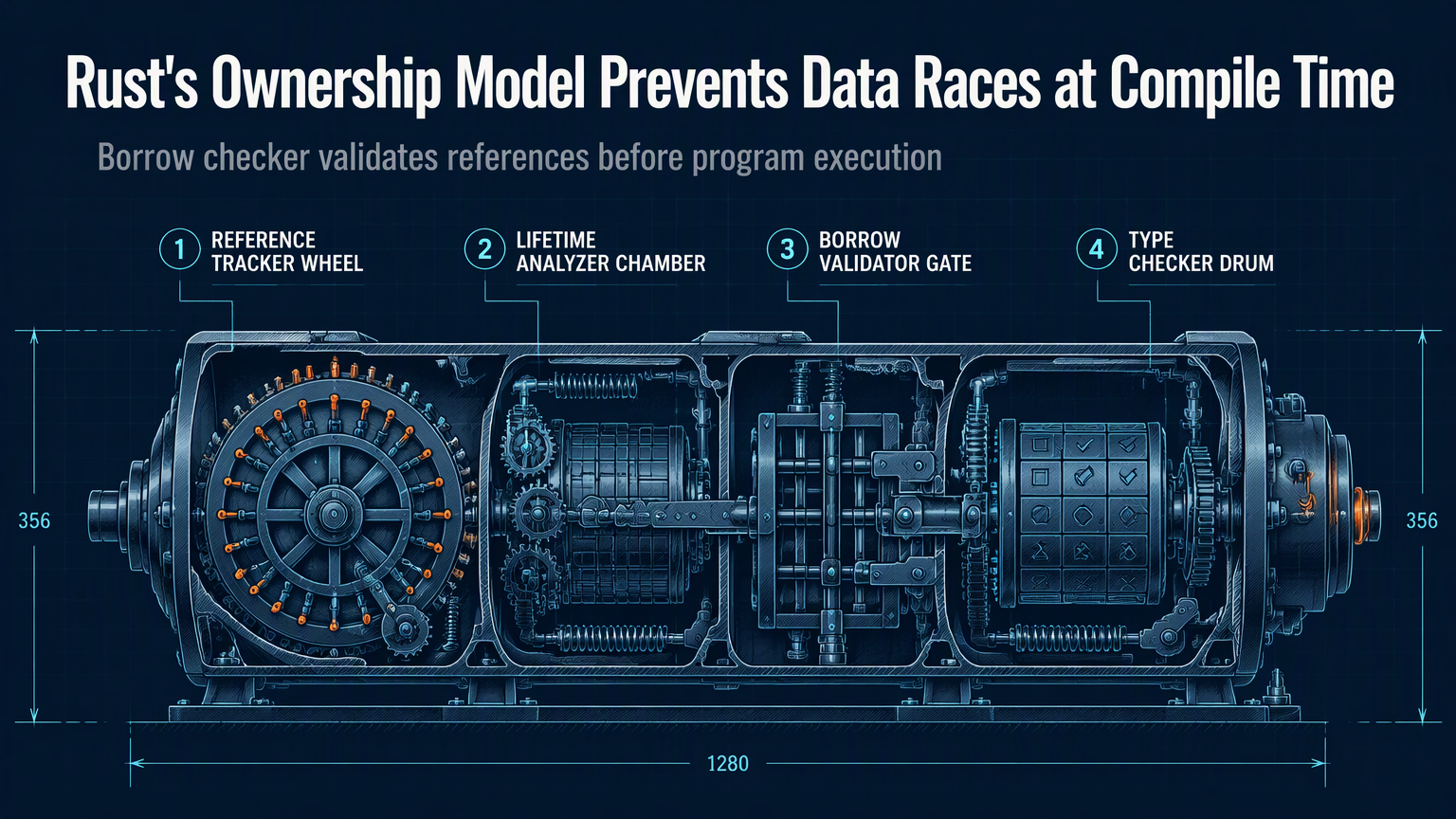
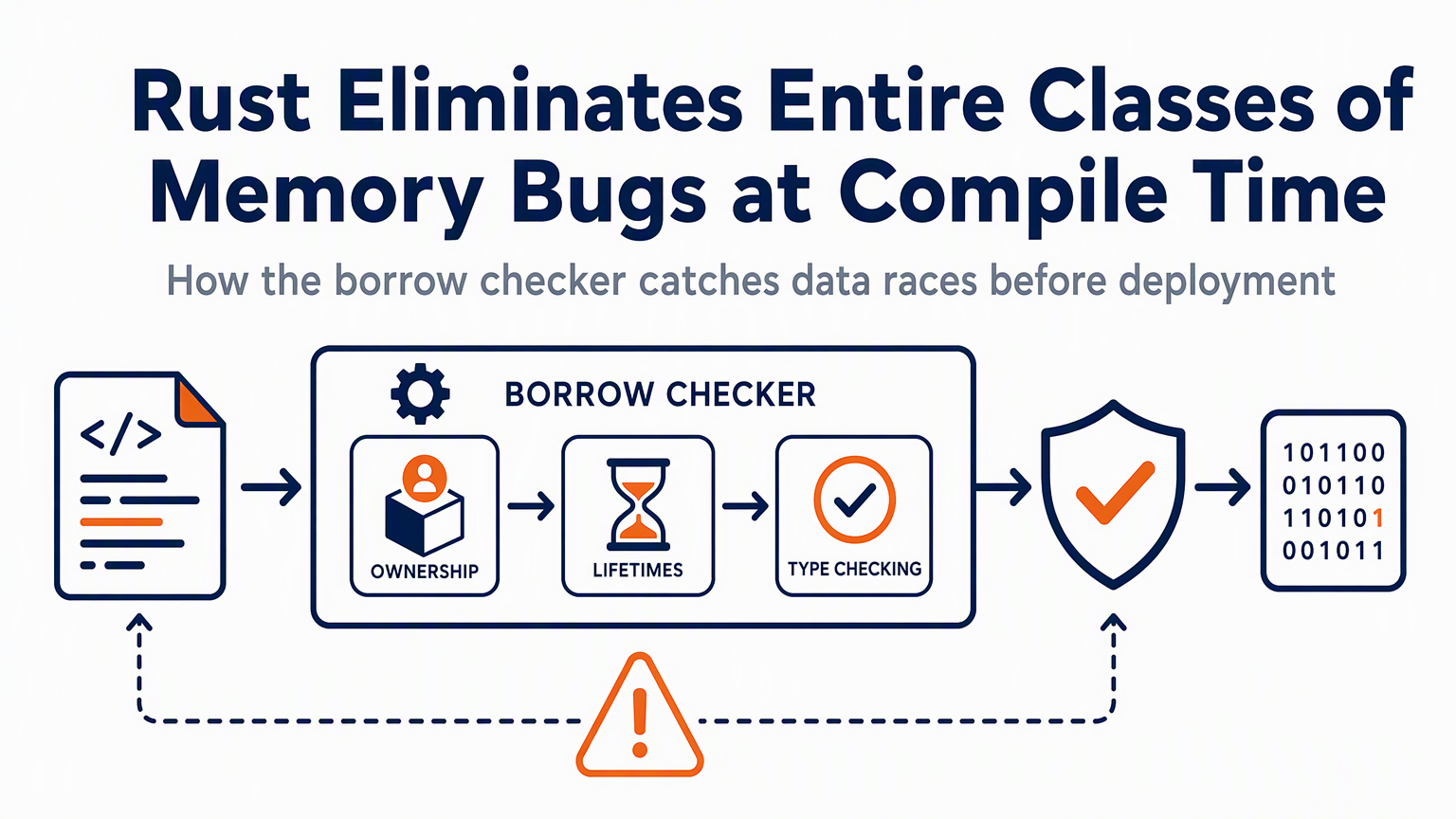
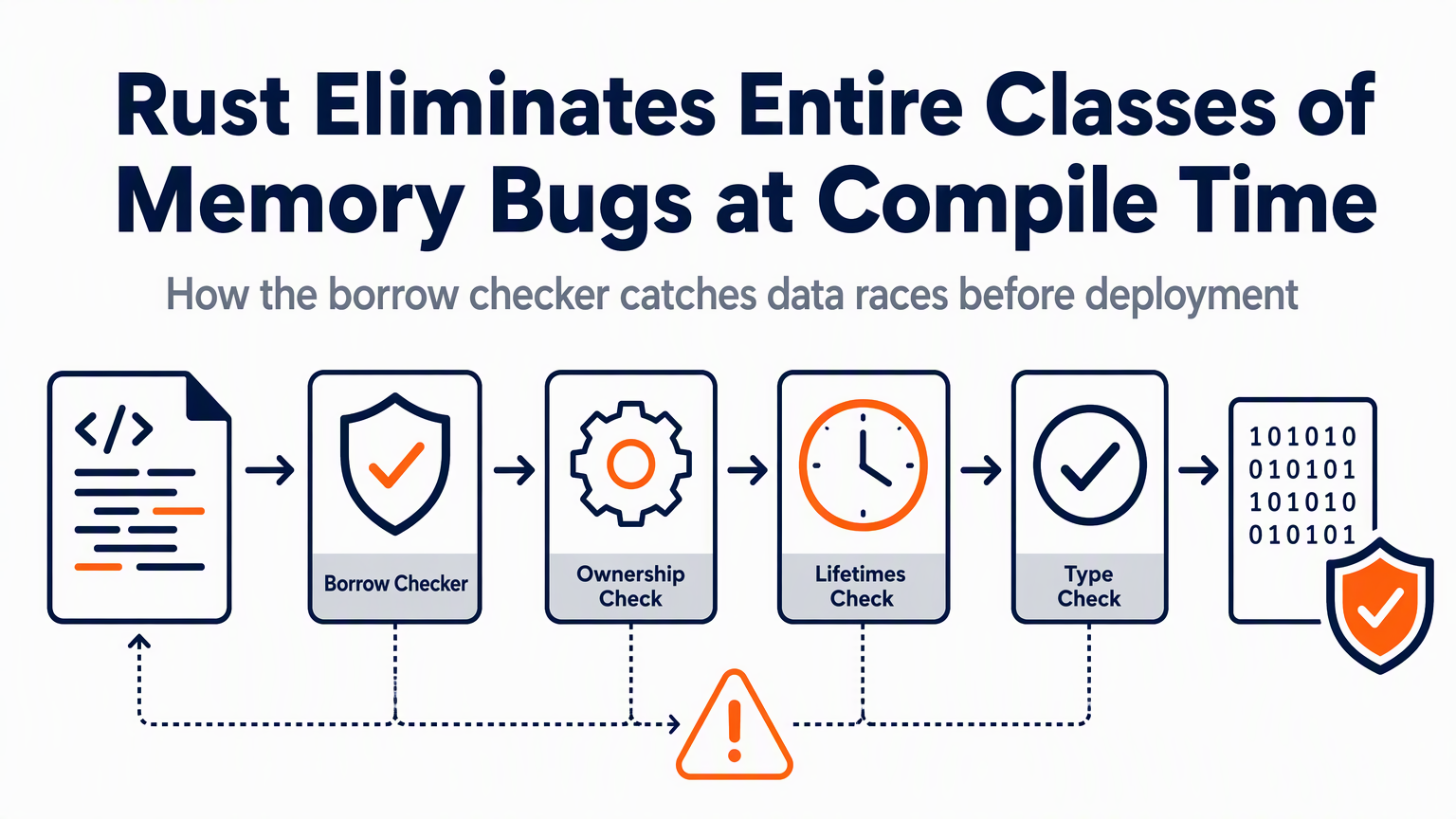
Rust's ownership model enforces three rules the compiler proves before your code runs: every value has one owner, references are either mutable XOR shared, and references never outlive their referent. This isn't a lint. It's a mathematical guarantee. If it compiles, the entire class of spatial and temporal memory errors is gone. No runtime sanitizer needed. No "hardening" flags. The proof is in the type system.