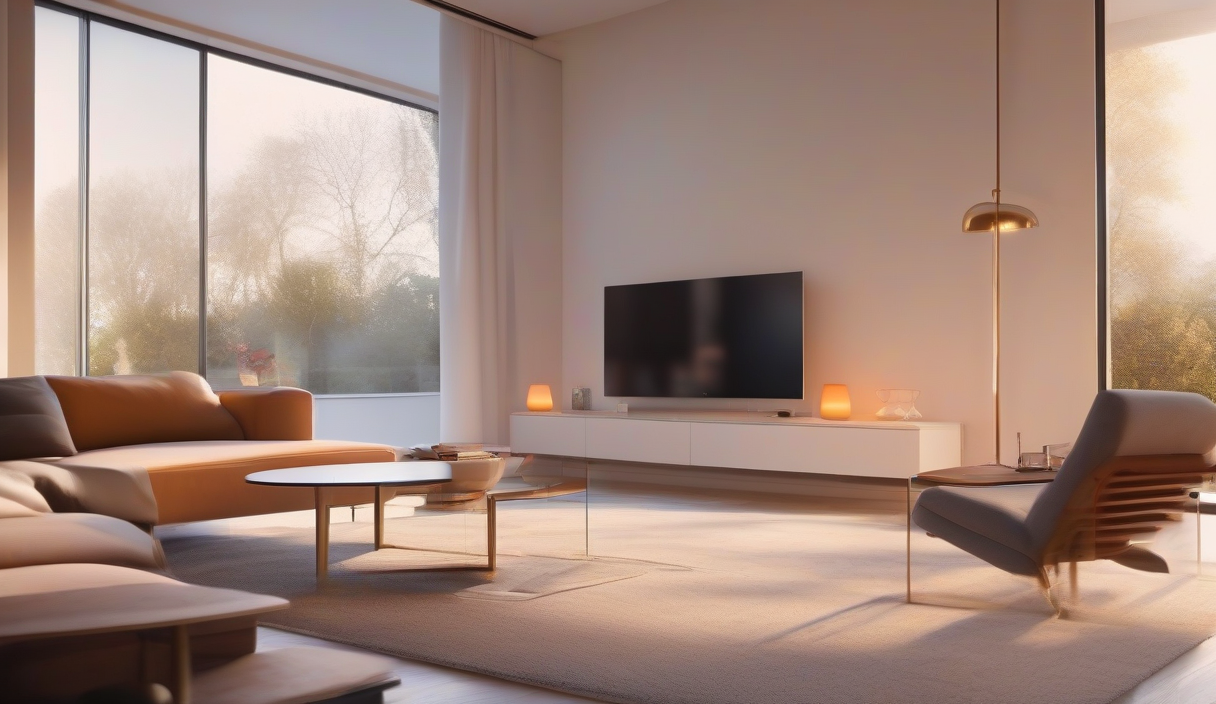
The smart home of 2026 doesn't announce itself with glowing hubs or voice assistants waiting for wake words. It disappears. Sensors embed in drywall. Logic runs on local edge nodes. Your house doesn't just respond; it anticipates. The revolution isn't adding devices. It's removing friction.
From Reactive to Predictive
Early IoT was remote control via app. Turn on light. Lock door. Check camera. 2026 shifts to ambient intelligence. A mesh of mmWave presence sensors, CO2 monitors, and power-signature analytics feeds a local LLM that learns household rhythms. It knows you're working late before you do. It pre-cools the bedroom, dims the hallway, and silences notifications. No routines programmed. No scenes named. Just pattern recognition running on a box the size of a deck of cards in your utility closet.
💡
TipMatter 1.3 and Thread 1.3 finally deliver on interoperability. Buy devices with the Matter logo; they join your fabric without vendor clouds.
The Invisible Sensor Layer
Cameras are out. Privacy regulations and social fatigue killed the indoor camera boom. Replacing them: 60GHz mmWave radar (presence, fall detection, breathing rate), thermal arrays (occupancy without PII), and ultrasonic water-leak tape under every appliance. These sensors cost $15-30 each, run on coin cells for years, and broadcast via Thread. A 2,500 sq ft home needs ~40 nodes. Total hardware: under $1,500. Data never leaves the premises.
| Sensor Type | Primary Use | Protocol | Est. Cost |
|---|---|---|---|
| mmWave Radar | Presence, Vitals, Gesture | Thread | $25 |
| Thermal Array | Anonymous Occupancy | Thread | $18 |
| Ultrasonic Tape | Leak Detection | Thread | $12 |
| CO2/VOC | Air Quality, HVAC Trigger | Thread | $22 |
| Power Clamp | Appliance Fingerprinting | Wi-Fi HaLow | $35 |
Edge Compute is Non-Negotiable
Cloud round-trips add 100-300ms latency. Unacceptable for safety (fall alerts) or comfort (lighting cross-fades). The 2026 standard: a Home Assistant Yellow or custom N100 box running Home Assistant OS, Frigate for NVR, and a local LLM (Llama 3.1 8B quantized) for intent parsing. All automations execute locally. Internet only for firmware updates and optional remote access via WireGuard. If the WAN drops, the home keeps thinking.
Energy as a First-Class Citizen
Dynamic electricity tariffs are standard in 38 states. Homes with solar + battery + EV charger run arbitrage automatically. The HEMS (Home Energy Management System) forecasts generation via NOAA data, predicts load from calendar + occupancy, and decides: charge car now, pre-heat water, export to grid at $0.42/kWh. Savings average $1,200/year. The killer feature? Grid-forming inverters that island seamlessly during outages. You don't notice the blackout until the neighbor texts.
"The best automation is the one you never notice. It's not a light turning on. It's the light already being right.
— Home Assistant Core Dev, Frenck
Security Without Theater
Ultra-wideband (UWB) smart locks authenticate via phone or watch in pocket. No keypad, no fingerprint smudges. Approach door → unlock. Walk away → lock + arm. Pair with mmWave inside to distinguish resident from intruder. False alarms drop 94% vs PIR. Video doorbells store encrypted clips locally; only motion thumbnails push to phone. Police requests get a warrant portal, not a backdoor.
⚠️
WarningAvoid Wi-Fi-only devices for critical paths. Congestion, DHCP churn, and vendor cloud deaths break automations. Thread/Matter over Ethernet backhaul is the only reliable foundation.
Start This Weekend
Don't boil the ocean. Pick one high-impact loop: bedroom climate. Buy a Thread border router ($60), two mmWave sensors ($50), a CO2 sensor ($22), and a Matter TRV ($45). Flash ESPHome on the TRV if it's not native. Build the automation: CO2 > 800ppm + occupancy = open TRV + boost ERV. Test for two weeks. Measure sleep score delta. Then expand. The compounding value of local data beats any single gadget.
✦
The connected home of 2026 is quiet, local, and boring in the best way. It works. You stop managing devices and start living in a space that manages itself. Begin with one room. Keep the data yours. The intelligence follows.