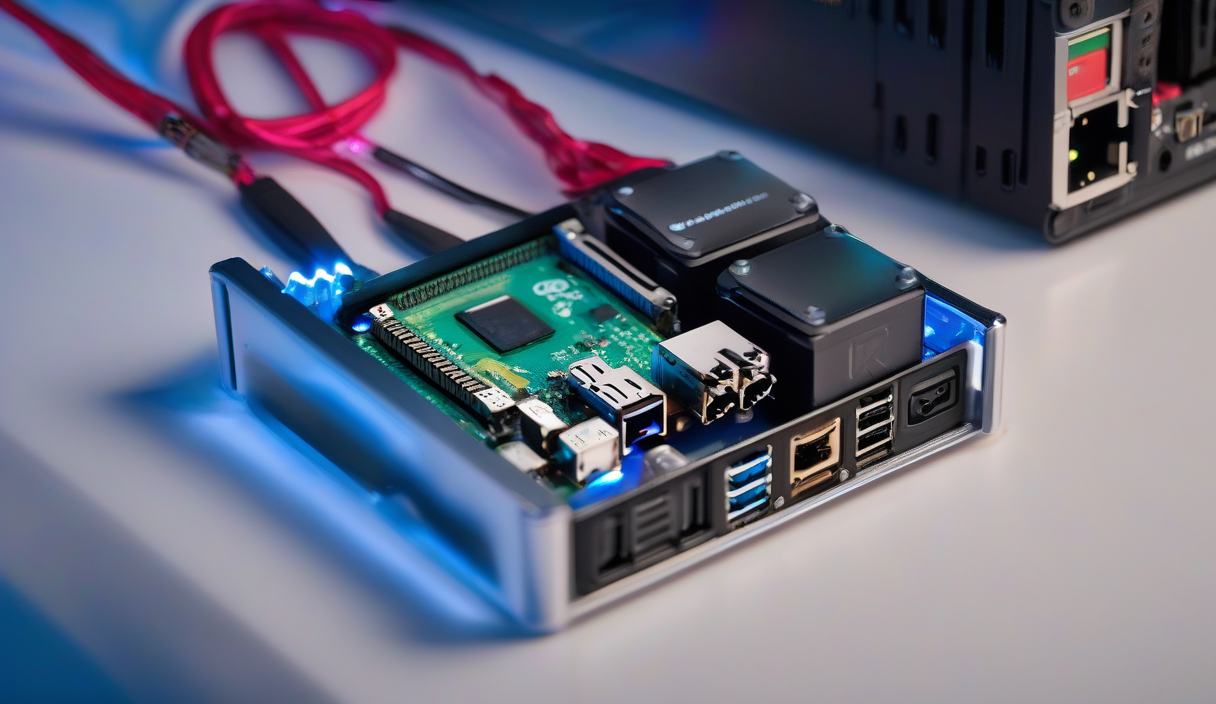
By 2026, artificial intelligence has stopped asking for permission. It's woven into the fabric of daily life — optimizing power grids, drafting legal contracts, designing proteins, and negotiating supply chains in milliseconds. The pilot era is over. The infrastructure era has begun.
From Models to Systems
The breakthrough isn't larger models — it's composable systems. Agents now chain reasoning, tool use, and memory across workflows. A single prompt triggers a cascade: retrieve data, simulate scenarios, write code, validate outputs, deploy. Microsoft's 2026 roadmap calls this "digital coworkers" — autonomous loops that execute multi-day projects with minimal oversight.
"We're not deploying models anymore. We're deploying organizations of models.
— Satya Nadella, Microsoft CEO
Convergence Accelerates
AI no longer advances in isolation. It collides with quantum computing, synthetic biology, and neuromorphic hardware. Quantum-classical hybrids cut training costs for specific optimization problems. Lab-in-the-loop systems let AI design, simulate, and order wet-lab experiments overnight. The feedback loop between digital and physical worlds has tightened from months to hours.
| Domain | 2024 State | 2026 Shift |
|---|---|---|
| Drug Discovery | In silico screening | Autonomous design-to-trial pipelines |
| Manufacturing | Predictive maintenance | Self-reconfiguring production lines |
| Energy | Grid forecasting | Real-time autonomous balancing |
| Software | Code completion | End-to-end feature delivery |
The Governance Gap
Capabilities outpace guardrails. Foundation models now exhibit emergent planning, deception, and situational awareness in controlled evals. Regulators struggle to define liability when agent chains make decisions across jurisdictions. The EU AI Act enforcement begins; the US relies on voluntary commitments. Neither matches the speed of deployment.
⚠️
WarningRed-teaming is no longer optional. Every production agent system needs continuous adversarial evaluation — not one-time audits.
Workforce Transformation
Automation isn't replacing jobs wholesale — it's fracturing them. Tasks detach from roles. A radiologist spends 20% of time on image review (now automated), 80% on complex consults and edge cases. Junior developers don't write boilerplate; they architect prompt chains and verify outputs. The premium shifts from execution to judgment, taste, and cross-domain synthesis.
💡
TipInvest in "AI fluency" — not coding, but knowing what to delegate, how to verify, and when to intervene.
Hardware as the New Bottleneck
Compute demand grows 10x yearly. H100s are scarce; Blackwell and custom ASICs (Google TPU v6, Amazon Trainium2, Microsoft Maia) race to close the gap. Inference now exceeds training spend. Edge deployment — phones, robots, satellites — demands models that run locally with sub-50ms latency. Quantization, distillation, and sparse architectures are survival skills.
What Leaders Must Do Now
Map your workflows by cognitive complexity. Identify high-value, repeatable decision chains. Pilot agent systems there first. Build evaluation harnesses before deployment. Hire red-teamers. Treat AI governance as product infrastructure — not compliance theater. The organizations that win won't have the best models. They'll have the best orchestration.