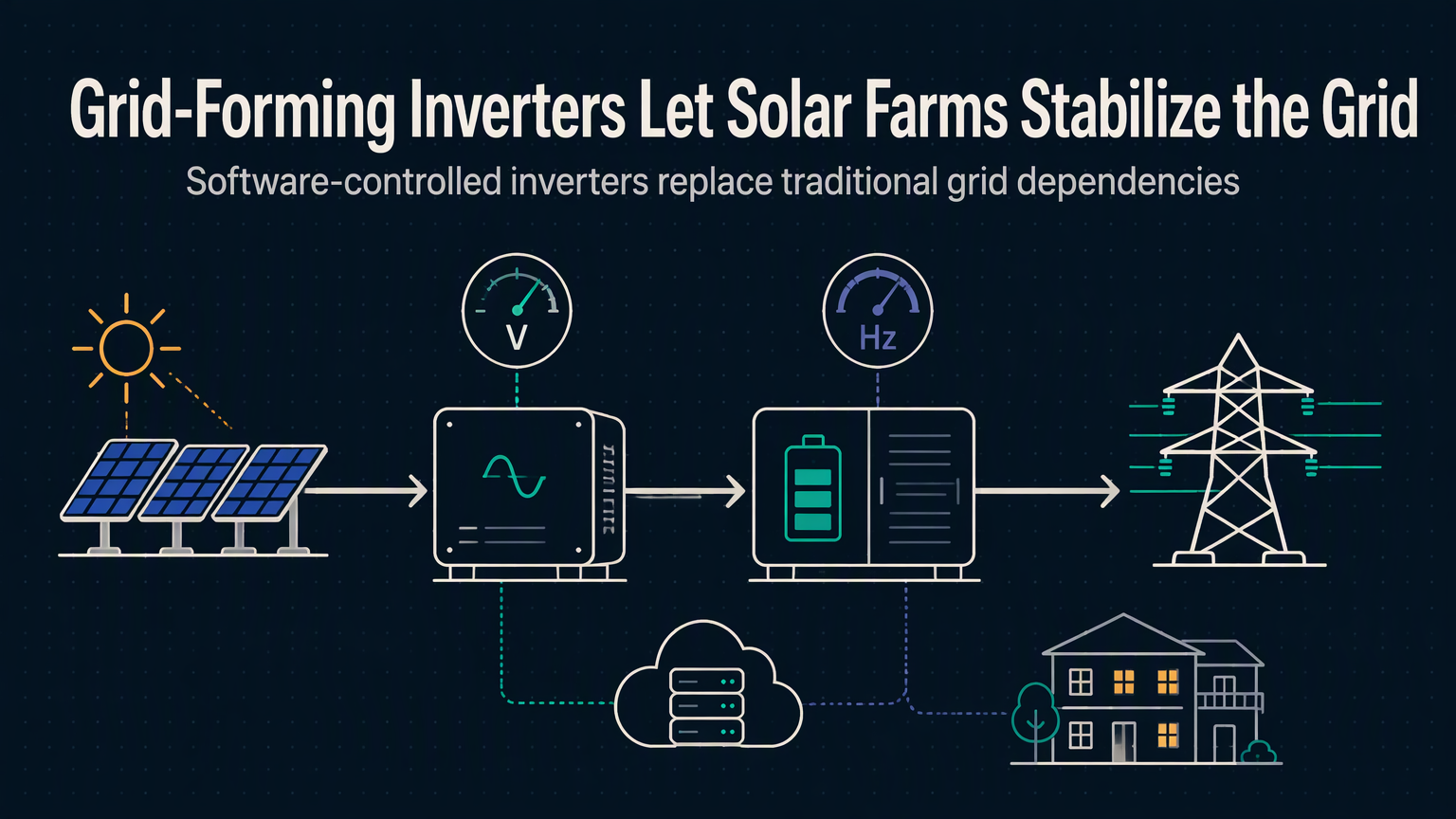
Imagine a power network that can reroute electricity the way the internet redirects traffic—instantly, intelligently, and without a single blackout. In early 2026 that vision stopped being a laboratory gimmick and became the operating reality of smart‑grid platforms that fuse AI forecasting with ultra‑fast storage. The result? An omni‑directional flow of power that lets rooftop solar, offshore wind, and pumped‑hydro work together like a symphony rather than a cacophony of oversupply and curtailment.
Why the Grid Is Getting a Makeover
AI‑Powered Forecasting: Seeing the Future in Real Time
Modern grid operators feed terabytes of weather, market, and load data into deep‑learning models that predict solar irradiance and wind speeds minutes ahead. Unlike the static, day‑ahead forecasts of the past, these models update every 30 seconds, allowing dispatch algorithms to pre‑position energy where it will be needed most. The impact is measurable: curtailment rates for utility‑scale solar have dropped from 12% in 2023 to under 4% in 2026, unlocking billions of kilowatt‑hours of clean energy.
Modular High‑Density Batteries: The New Dispatchable Resource
Parallel to AI advances, modular lithium‑ion and solid‑state packs have shrunk to container‑size units that can be stacked like Lego bricks. Their charge‑discharge latency is now measured in milliseconds, which means they can absorb a solar spike and release it to a factory the instant the plant’s demand curve dips. When paired with grid‑scale liquid‑metal flow batteries—systems that store energy in molten alloys for days—operators gain both short‑burst agility and long‑term firming capability.
"The grid is no longer a one‑way pipe; it's a two‑way marketplace where every kilowatt has a price, a location, and a purpose.
— Dr. Lina Ortiz, Lead Engineer, GridX Labs
Digital Twins and Real‑Time Load Balancing
Digital twins simulate every node—from a 5 kW residential rooftop to a 1 GW offshore wind farm—in a unified virtual environment. When a sudden cloud cover darkens a solar park, the twin instantly recalculates optimal power paths, nudging stored energy from a nearby flow battery and adjusting demand‑response signals for industrial customers. The loop closes in under 200 ms, a speed that would have been science fiction a decade ago.
💡
TipIf you manage a municipal utility, start by piloting an AI‑driven forecasting service on a single feeder. The data you collect will prove the ROI of scaling to a city‑wide digital grid.
What This Means for Net‑Zero Goals
Flexibility is the missing piece of the decarbonization puzzle. By turning intermittent renewables into dispatchable resources, the new grid architecture reduces reliance on fossil peaker plants, trims operating costs, and accelerates the electrification of transport, heat, and industry. The International Energy Agency now projects that a fully digital, AI‑enabled grid can shave 15% off global CO₂ emissions by 2035.
✦
Action Steps for Stakeholders
1. Audit your existing infrastructure for AI‑ready data streams; invest in high‑resolution sensors where gaps appear.
2. Deploy modular battery packs at strategic load centers to test response times.
3. Partner with a flow‑battery provider to secure long‑duration firming for seasonal variability.
4. Build a digital twin prototype using open‑source grid‑simulation tools.
5. Align procurement contracts with performance‑based pricing that rewards flexibility.
The transition won’t happen overnight, but every megawatt of AI‑optimised, storage‑backed renewable power brings the world a step closer to a truly carbon‑free grid. Start today, and let the data drive the change.