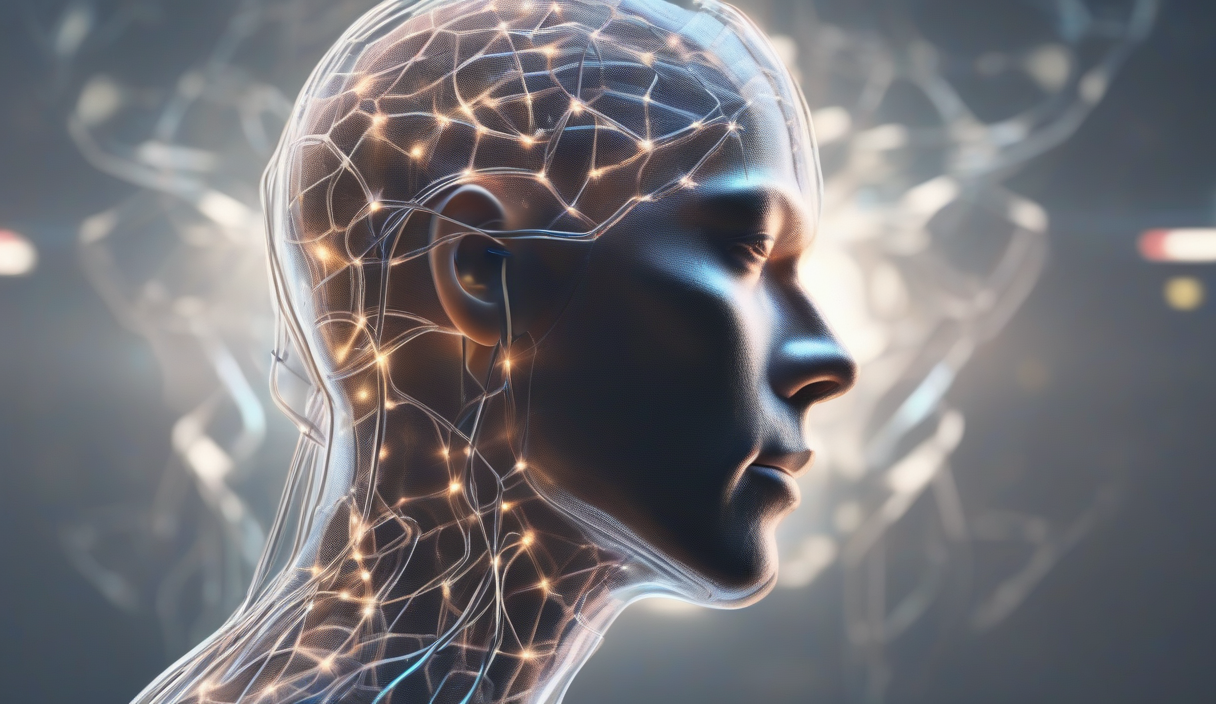
Imagine typing this sentence with your thoughts alone. No keyboard. No voice command. Just intent translated directly into action. That future isn't science fiction—it’s the accelerating reality of neural interfaces, where silicon meets synapse to rewrite human capability.
From Lab Curiosity to Clinical Reality
Brain-Computer Interfaces (BCIs) have evolved from bulky EEG caps measuring noisy scalp signals to fully implanted microelectrode arrays recording single-neuron activity. Companies like Neuralink, Synchron, and Blackrock Neurotech are pushing bandwidth from bits per minute to megabits per second. The pivotal shift? Moving from “read-only” decoding to bidirectional, closed-loop systems that write information back into the nervous system.
The Stack: Hardware, Decoding, Application
Building a neural interface requires solving three brutal engineering problems simultaneously:
| Layer | Challenge | Current State |
|---|---|---|
| Hardware | Biocompatibility + bandwidth | Flexible polymer probes, 10k+ channels |
| Decoding | Real-time intent extraction | Transformers + RNNs on edge ASICs |
| Application | Closed-loop control | Neuroprosthetics, speech synthesis, cursor control |
Neural decoding sits at the core. Modern pipelines treat spike trains as sequential data, using attention-based architectures to predict movement trajectories or phonemes with sub-100ms latency. The model runs on an implanted ASIC—no cloud round-trip allowed.
Neuroprosthetics: Restoring Agency
The most immediate impact is clinical. Paralyzed patients now control robotic arms, navigate wheelchairs, and type at 90 characters per minute using attempted handwriting decoded from motor cortex. Speech neuroprostheses decode attempted vocal tract movements from sensorimotor cortex, synthesizing audible words for locked-in patients. These aren’t demos; they’re FDA Breakthrough Devices in human trials today.
"The brain doesn’t care where the signal comes from—it cares about statistical structure. If you give it a consistent sensorimotor loop, it will learn to drive anything.
— Jose Carmena, UC Berkeley
Cognitive Enhancement: The Next Frontier
Restoration is step one. Augmentation is step two. DARPA’s N3 program and kernel’s non-invasive optical systems target healthy users: memory prosthetics that boost hippocampal encoding, attention modulation via closed-loop neuromodulation, and direct knowledge transfer between brains. The technical barrier isn’t physics—it’s signal-to-noise ratio through the skull and ethical frameworks for cognitive liberty.
⚠️
WarningNon-invasive BCIs (EEG, fNIRS, OPM-MEG) offer safety but suffer from low spatial resolution and high artifact contamination. Invasive approaches win on fidelity but carry surgical risk. Hybrid systems may dominate the next decade.
Engineering Checklist for BCI Developers
If you’re building in this space, prioritize these five constraints:
The Data Privacy Imperative
Neural data is the ultimate biometric—it reveals intent, emotion, and cognitive state before you act. Regulators are waking up. Chile amended its constitution to protect “ereuro-rights.” The EU’s AI Act classifies neural interfaces as high-risk. Any commercial BCI must architect for on-device processing, differential privacy on model updates, and user-sovereign key management. Cloud inference is a non-starter.
💡
TipStart with open datasets (BNCI, OpenNeuro) and benchmark your decoder on standardized tasks (cursor control, speech synthesis) before touching hardware. Simulation-first development saves months of animal/clinical iteration.
What’s Next: Plasticity as a Feature
The brain adapts to the interface. Users develop “neural strategies”—distinct activation patterns optimized for the decoder. This co-adaptation is the secret sauce. Future systems will exploit it: adaptive decoders that track representational drift, meta-learning frameworks that minimize calibration time, and interfaces that become more intuitive the longer you use them.
✦
Neural interfaces are no longer a question of “if” but “when” and “who.” The hardware is shrinking. The algorithms are scaling. The regulatory pathways are forming. For engineers, the entry point is clear: master real-time neural signal processing, embed models on ultra-low-power silicon, and design for human agency from day one. The mind-machine merger has begun—build the layer that makes it trustworthy.