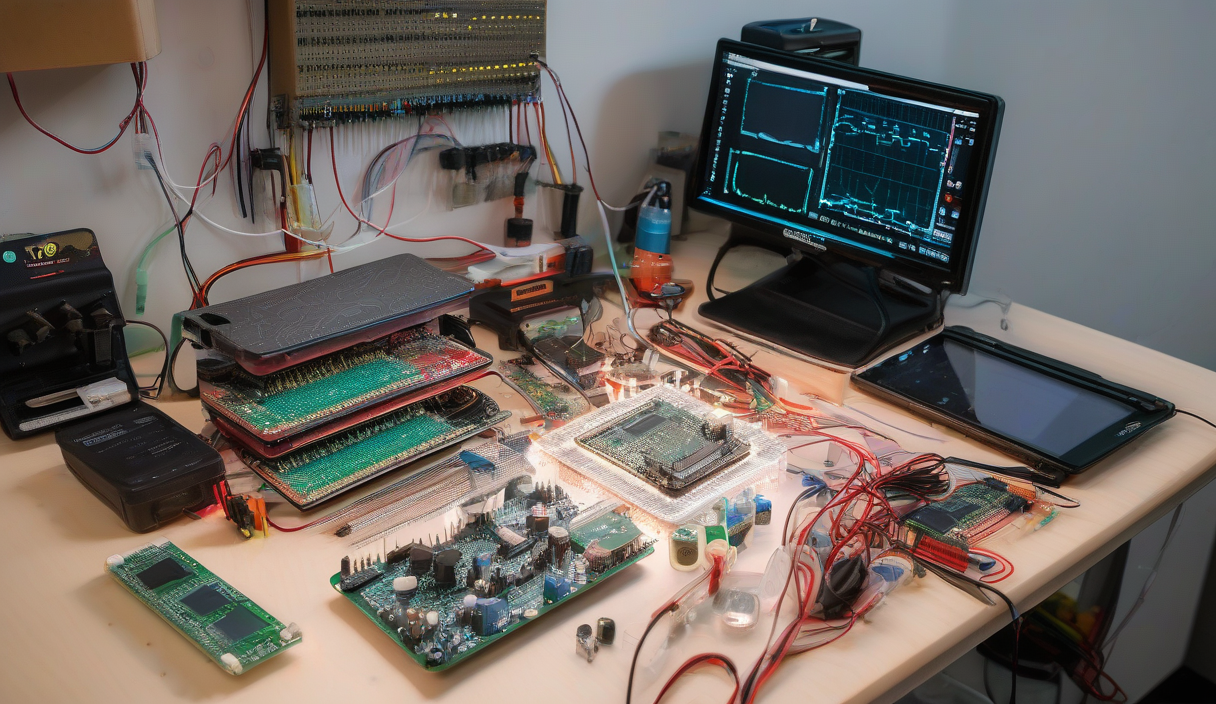
The cursor moves across the screen. No mouse. No keyboard. No voice command. Just intention. In 2026, this isn't a demo — it's Tuesday for thousands of patients and early adopters. Brain-computer interfaces have crossed the threshold from lab curiosity to commercial reality, and the implications stretch far beyond medical necessity.
From Paralysis to Performance
The clinical track record is undeniable. Paralyzed patients now type at 90 characters per minute using implanted electrode arrays. ALS patients communicate full sentences through attempted speech decoded by transformer models. The FDA has cleared multiple systems for home use. But 2026 marks the inflection point where the same architecture — high-bandwidth neural recording, real-time AI decoding, closed-loop stimulation — begins serving augmentation markets.
"We're not restoring function anymore. We're extending the nervous system into digital space.
— Dr. Karen Chen, Neural Interface Lab, Stanford
Three Architectures Competing
| Approach | Bandwidth | Invasiveness | Status 2026 |
|---|---|---|---|
| Utah Array (implanted) | 10k+ channels | High (craniotomy) | Clinical standard |
| Stentrode (endovascular) | 16-64 channels | Medium (jugular access) | FDA breakthrough |
| High-density ECoG | 1k-4k channels | Medium (craniotomy) | Epilepsy mapping + BCI |
| Non-invasive fNIRS/EEG | <100 channels | None | Consumer wellness |
The trade-off remains bandwidth versus risk. Implanted arrays deliver single-neuron resolution but require neurosurgery. Endovascular approaches like Synchron's Stentrode thread electrodes through blood vessels — no open brain surgery — but capture population signals. Non-invasive methods suffice for meditation apps and attention monitoring, not cursor control.
💡
TipDevelopers: the OpenBCI Galea headset (fNIRS + EEG + eye tracking) ships with Unity/Unreal SDKs. Start building neuroadaptive VR now — no surgery required.
AI Is the Decoder, Not the Interface
The breakthrough isn't better electrodes — it's better decoding. Modern BCIs treat neural data as a translation problem. Transformer architectures trained on hours of paired neural-behavioral data map population activity to intent with >95% accuracy. Calibration time dropped from weeks to minutes. Transfer learning lets a decoder trained on Patient A bootstrap Patient B in hours.
Security: The New Attack Surface
A BCI is a networked computer with direct write access to the nervous system. That sentence should terrify security teams. Demonstrated vulnerabilities include: adversarial neural inputs inducing false percepts, model extraction attacks revealing cognitive states, and stimulation hijacking via compromised firmware. The FDA now requires threat modeling for Class III neurodevices. NIST published SP 800-231 (Neurotechnology Cybersecurity) in March 2026.
⚠️
WarningIf your BCI app transmits raw neural data to the cloud for decoding, you're streaming biometric identifiers more unique than fingerprints. Process locally. Encrypt everything. Audit the supply chain.
Cognitive Enhancement: Early Signals
Closed-loop stimulation targeting working memory circuits shows 15-20% improvement in n-back tasks. DARPA's N3 program demonstrated non-invasive ultrasound neuromodulation boosting learning rates in language acquisition. Kernel's Flow2 headset markets "focus enhancement" via fNIRS neurofeedback. None are magic pills. All require training. The enhancement ceiling remains unknown — but the floor is rising fast.
✦
What to Do This Quarter
1. Audit your product roadmap for neural input readiness. Voice and gesture were the last paradigm shift. Intent is next. 2. If you handle health data, extend your compliance framework to neural data — GDPR and CCPA amendments explicitly cover it. 3. Prototype with non-invasive kits (OpenBCI, Muse, Galea) to build UX patterns before implanted APIs stabilize. 4. Hire a neuroscientist. Not a consultant. A full-time team member who speaks both spikes and sprints.
ℹ️
NoteThe first consumer BCI app store launches Q3 2026. Submission guidelines drop next month. Start building.