Imagine a world where machines not only see but understand every pixel—identifying tumors in seconds, flagging safety hazards on a factory floor, and turning live video into actionable data streams. 2024 is that year, and the breakthroughs listed below are the engine behind the shift.
Top 10 Computer Vision Techniques Revolutionizing AI in 2024
1. Prompt‑Driven Image Segmentation
Instead of painstakingly labeling masks, developers now feed natural‑language prompts (e.g., "segment all vehicles") to models like Segment Anything Model (SAM) 2.0. The result: near‑instant, high‑quality masks across domains.
2. Vision Transformers (ViT) with Sparse Attention
Sparse‑attention ViTs cut compute by 40% while preserving accuracy, making them ideal for edge devices that need real‑time object detection without draining batteries.
3. Diffusion‑Based Data Augmentation
Diffusion models generate photorealistic variations of training images, boosting robustness against lighting shifts and occlusions—especially useful for autonomous‑driving pipelines.
4. Multi‑Modal Contrastive Learning
By aligning visual embeddings with text, audio, or depth cues, models like CLIP‑4 achieve zero‑shot detection across unseen categories, slashing the need for exhaustive retraining.
5. Real‑Time 3D Reconstruction via Neural Radiance Fields
Fast‑NeRF variants now reconstruct full‑scene geometry in under a second, opening doors for AR navigation and on‑the‑fly virtual try‑ons.
6. Self‑Supervised Video Understanding
Algorithms that predict future frames or motion vectors without labels are delivering state‑of‑the‑art action recognition, cutting annotation costs by up to 80%.
7. Edge‑Optimized Tiny YOLOv8
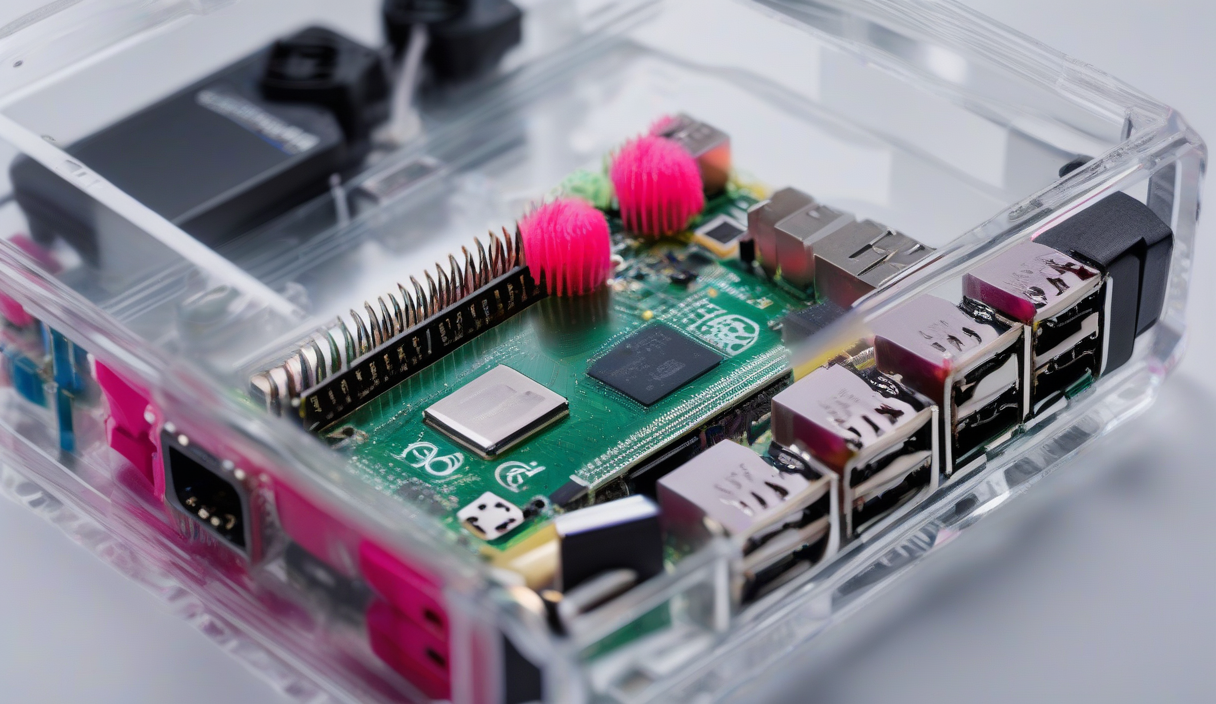
Tiny YOLOv8 packs 30 FPS inference on a Raspberry Pi 5, making smart‑camera deployments affordable for small businesses and hobbyists.
8. Explainable AI Heatmaps
Grad‑CAM++ and Integrated Gradients now output interactive heatmaps that can be overlaid on live video, satisfying regulatory demands for transparency.
9. Federated Vision Learning
Privacy‑first pipelines let hospitals collaboratively train diagnostic models without ever moving patient images off‑site, leveraging secure aggregation protocols.
10. Adaptive Loss Functions for Imbalanced Data
Losses like Focal Tversky and Class‑Balanced BCE dynamically re‑weight rare classes, dramatically improving detection of small objects such as drones or micro‑defects.
💡
TipStart small: integrate a prompt‑driven segmentation model into your existing pipeline and measure ROI before scaling to full‑stack vision.
✦
"The best AI systems are those that turn perception into immediate action.
— Dr. Lina Patel, Vision Lab Lead
Ready to future‑proof your projects? Pick one of the ten techniques, prototype within a week, and benchmark against your current baseline. The faster you iterate, the sooner you’ll capture the competitive edge that 2024’s vision breakthroughs promise.