By 2026, augmented reality will stop being a feature and start being the interface. The screens we carry, wear, and stare at all day will dissolve into the world around us. This isn't speculation — it's the logical endpoint of spatial computing, AI-driven context awareness, and hardware that finally fits in a glasses form factor.
The Hardware Inflection Point
Meta's Orion prototype, Apple's Vision Pro evolution, and a wave of lightweight optical see-through glasses from Xreal, Rokid, and Brilliant Labs converge on one goal: all-day wearability. The spec sheet matters less than the social contract. When AR glasses look like Warby Parkers and weigh under 50 grams, adoption shifts from early adopters to knowledge workers, then consumers. Battery life, thermal management, and display brightness in direct sunlight remain the final engineering hurdles — but 2026 is the year they become solvable at scale.
AI Becomes the AR Operating System
Generative AI doesn't just enhance AR — it makes it usable. Voice commands replace pinch gestures. Real-time object recognition labels the world. Agentic AI anticipates needs: pulling up a repair manual when you stare at a broken espresso machine, translating signage in your peripheral vision, summarizing the Slack thread floating beside your coffee cup. The killer app isn't an app at all. It's an ambient intelligence layer that knows what you're looking at, what you're doing, and what you need next.
"AR without AI is just a heads-up display. AI without AR is just a chatbot. Together, they're the next computing platform.
— Avi Bar-Zeev, XR Pioneer
Enterprise Goes First — Again
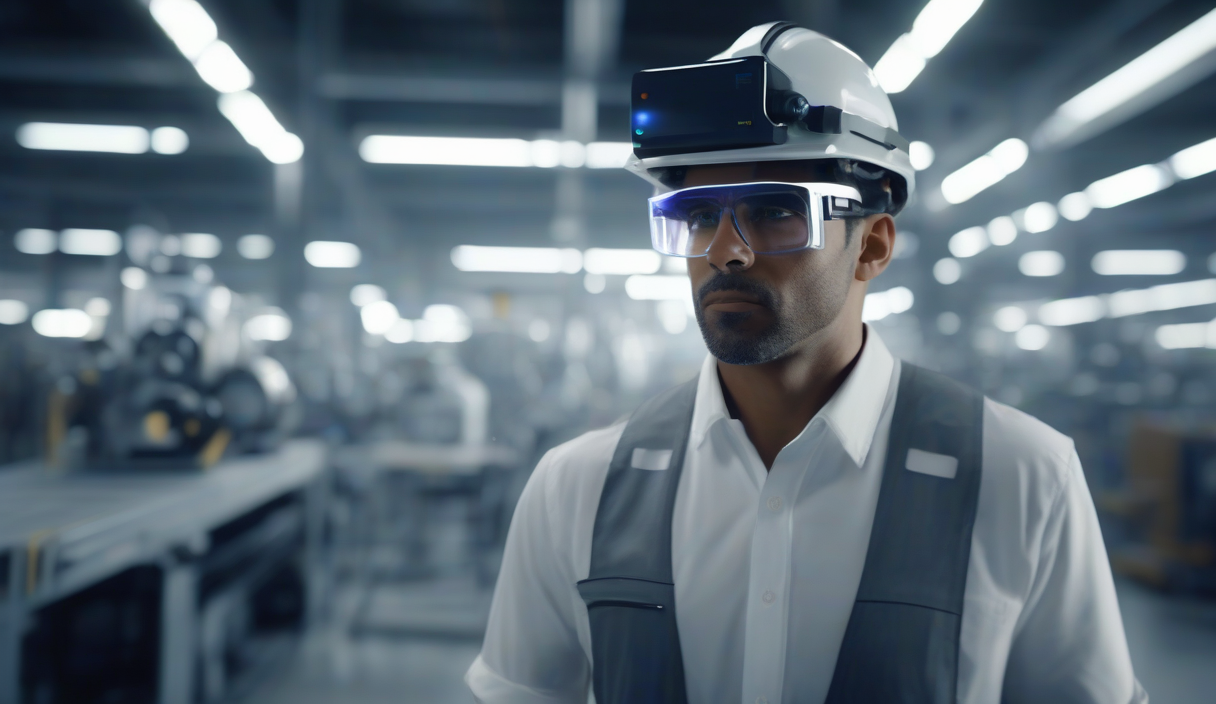
Manufacturing, logistics, healthcare, and field service already run on AR. Boeing cut wiring harness assembly time by 25% with HoloLens. DHL uses vision picking to boost warehouse efficiency 15%. Surgeons overlay CT scans during procedures. In 2026, these pilots become standard operating procedure. The ROI is proven. The workflows are codified. The next wave: digital twins synced in real time, remote experts annotating live video feeds, and AI-generated step-by-step guidance for complex tasks.
| Industry | 2024 Use Case | 2026 Evolution |
|---|---|---|
| Manufacturing | Assembly guidance | AI-driven predictive maintenance overlays |
| Healthcare | Surgical navigation | Real-time patient vitals + imaging fusion |
| Logistics | Vision picking | End-to-end digital twin orchestration |
| Retail | Virtual try-on | Personalized in-store navigation + offers |
Consumer AR: Beyond Filters
Pokemon GO was the trailer. The feature film arrives when navigation, shopping, social, and productivity merge into a persistent layer. Imagine walking down a street: restaurant ratings hover above doors, a friend's avatar waves from a cafe window, your calendar reminds you of a meeting as you approach the building, and you pay with a glance. No phone unlock. No app switching. The world becomes the home screen.
💡
TipDevelopers: start building for spatial contexts, not screens. Design for glanceability, voice-first input, and semantic understanding of physical space.
Education and Training Get Immersive
Medical students practice procedures on holographic patients. Technicians learn engine repair with exploded-view overlays. Language learners converse with AI natives in simulated environments. Retention rates jump 75% versus 2D training. In 2026, LMS platforms integrate AR modules natively. Corporate onboarding shifts from PDFs to spatial walkthroughs. The classroom doesn't disappear — it expands.
✦
Privacy, Trust, and the Social Contract
Always-on cameras on faces terrify regulators and civilians alike. 2026 brings mandatory on-device processing, visual indicators when recording, and strict data minimization standards. Apple's privacy architecture sets the baseline. Open standards like OpenXR and the Metaverse Standards Forum prevent walled gardens. The winners will be platforms that treat biometric and spatial data as toxic assets — encrypted, local, and user-owned.
⚠️
WarningIf your AR strategy doesn't include a privacy-first architecture, you're building a liability, not a product.
What to Build Now
Don't wait for perfect hardware. Prototype with Quest 3, Vision Pro, or WebXR on mobile. Focus on high-value, high-frequency tasks: equipment inspection, remote assistance, spatial design review, contextual learning. Measure time-to-competence, error reduction, and cognitive load. Partner with hardware vendors on developer programs. Hire 3D interaction designers, not just mobile devs. The platform shift rewards early movers who understand spatial UX.